675 Mansell Rd STE 104, Roswell, GA Mon-Sun: 7:00 AM - 7:00 PM
Licensed & Insured

Siding Contractor in Roswell, GA for Hardie, Wood Rot Repair & Historic Homes

Roswell is hard on siding. Summer dew points sit near 70°F, more than 50 inches of rain falls every year, and tall pines keep north walls shaded and damp for weeks. Add spring hail, red clay splash-back and thousands of 1980s–90s homes still wearing Masonite or LP hardboard, and you get swollen boards, rotted trim and hidden sheathing damage. Roswell Siding & Exterior Specialists replaces failing siding with James Hardie fiber cement, engineered wood, cedar shake accents and board and batten, and we fix the rot underneath before anything new goes up.

We work on homes all over Roswell, from mill-era clapboard near Canton Street to colonials in Horseshoe Bend and Martin's Landing. Our crews also work regularly in Alpharetta, Milton, Mountain Park, Sandy Springs and Marietta. We know which HOAs ban vinyl, what the Roswell Historic Preservation Commission wants to see on a Certificate of Appropriateness, and how to blend new lap siding with a brick front. Soffit, fascia, trim, exterior painting and gutters are all available, so one crew can finish the whole exterior.

  • Bonded and insured
  • Financing available
  • Serving homes within a 20-mile radius of Roswell

Roswell homeowners call us when they want careful planning, honest answers about what's behind their siding, and steady communication from the first inspection through the final walkthrough.

Request Your Free Estimate

No obligation. Fast, honest quotes.

Your information is never shared.

Online Estimates
Onsite Service
Licensed & Insured
Customer Rated
Local Expertise

Why Roswell Homes Need a Siding Contractor Who Knows North Fulton

Siding that holds up for 40 years in Phoenix might not last 15 in Roswell. Our humidity, storms, wooded lots and housing eras wear siding down in their own ways, and the local permit, HOA and historic rules affect what you're allowed to install. Here's what we deal with.

Humidity, Rain, Hail and Shade

Roswell has a humid subtropical climate. Summer highs run into the upper 80s and low 90s, and dew points often sit in the upper 60s to low 70s, so wet siding stays wet. Annual rainfall tops 50 inches and comes all year. Short, heavy thunderstorms drive rain sideways behind badly lapped boards, J-channels and window trim. Winter nights drop into the 30s, and the occasional freeze-thaw cycle or ice storm splits swollen hardboard edges even further. From March through May, hail can dent aluminum, crack brittle older vinyl and chip paint on fiber cement. On top of that, mature pines and hardwoods shade most lots, so north walls grow mildew and algae, gutters overflow onto the siding, and storms drop limbs. Lots along the Chattahoochee and Willeo Creek get even more fog and humidity.

Housing Built in Three Distinct Eras

Historic Roswell, around Canton Street, Mimosa Boulevard and Bulloch Avenue, has antebellum and late-1800s homes with wood clapboard and board and batten, plus brick buildings tied to Roswell Mill (founded 1839). Most of the city, though, was built between the 1970s and 2000s. Homes from the 1970s and 80s often have cedar, redwood, T1-11 or cedar shakes that are now at the end of their life. From the mid-80s to the mid-90s, builders used Masonite, LP hardboard and OSB lap siding, all later the subject of class-action lawsuits, and in this climate they swell and come apart. Late-90s and 2000s subdivisions like Horseshoe Bend usually pair a brick front with vinyl or Hardie on the sides and back. Some have EIFS stucco with known moisture problems.

Permits, HOAs and the Historic District

Georgia enforces state minimum codes based on the IRC, but each city runs its own building department. Roswell, Alpharetta, Milton, Sandy Springs and the others each decide when re-siding needs a permit, and replacing sheathing or covering a large area usually triggers one. In Roswell's Historic District, changing exterior materials requires a Certificate of Appropriateness. The commission generally prefers in-kind wood or fiber cement with a matching reveal, and it often discourages vinyl. Most North Fulton HOAs also have architectural review committees that approve material, color and profile, and many require fiber cement. On homes built before 1978, the EPA's lead-safe RRP rules apply, and asbestos-cement siding needs its own handling and disposal.

A Market That Rewards Quality

Roswell has more than 90,000 residents and a high homeownership rate. Many owners have lived for years in homes that are now 25–45 years old, and they're ready for a full exterior replacement. Buyers who work along GA-400 and at Avalon do their research. They want Hardie with ColorPlus or LP SmartSide because those materials hold resale value, and they'll pay for good workmanship. When a home sells, inspectors regularly flag hardboard rot, which puts sellers on a deadline. After hail, out-of-town storm chasers flood the area. That's why it matters to hire a bonded, insured local team.

Know The Signs

Common Siding Problems We Find on Roswell-Area Homes

Most of the siding failures we see around Roswell come down to the same few causes: humidity, hardboard from the wrong era, shade and storms. Here are the problems we run into most often, how to recognize them and how urgent each one really is. Some can wait a season. A few shouldn't.

Masonite and LP Hardboard Swelling and Rot

Serious

Hardboard and OSB lap siding are made from compressed wood fibers and resin. Once water gets past the paint at a drip edge, butt joint or nail hole, the fibers soak it up, swell, soften and eventually crumble. Repainting can't fix it.

Why it happens here

Builders used hardboard on thousands of North Fulton homes from the mid-1980s to the mid-1990s. Our dew points stay high, rain falls all year, and the shade from tall pines keeps walls from drying out, so these boards absorb moisture for months. Winter freeze-thaw nights then push the swollen edges apart. Many owners don't find out until a buyer's home inspector writes it up. By then, the sheathing and sill plates behind it are often damaged too, and that has to go into the repair plan.

Signs to watch for
  • Bottom edges of boards flared, wavy or 'mushroomed'
  • Soft spots that give when pressed with a thumb
  • Blistering or peeling paint along lap seams
  • Nail heads sunk deep into swollen boards
  • Visible fibers or crumbling at butt joints
  • Embossed 'wood grain' pattern breaking apart
Local patterns

We see it constantly in Martin's Landing and other 1980s–90s Roswell subdivisions, in Windward in Alpharetta, and in older Dunwoody and Peachtree Corners neighborhoods. It's usually worst on north and rear walls, behind shrubs and below roof-wall intersections.

Our fix

Full removal of the hardboard, sheathing and framing repair where rot has spread, new housewrap and flashing, then James Hardie or LP SmartSide installed with proper clearances.

Rotted Wood Trim, Sills and Corner Boards

Moderate

Even when the siding itself is fine, the wood trim around it often rots first. That includes window sills, corner boards, fascia and band boards. Water collects at joints and end grain, the paint fails, and the wood decays from the inside out.

Why it happens here

Roswell gets more than 50 inches of rain a year, and the heavy summer storms push water into every unsealed joint. On wooded lots, leaves clog the gutters and the overflow sheets down the fascia and corner boards. Downspouts that empty right against the house keep the bottom of the trim soaked. On 1970s–90s homes, finger-jointed pine trim that was never back-primed simply doesn't last in this humidity.

Signs to watch for
  • Paint peeling at the bottom of corner boards
  • Window sills that feel spongy or crack
  • Dark staining where gutters overflow
  • Gaps opening at miter joints
  • Fascia sagging or pulling away from rafters
  • Carpenter ants or wood dust nearby
Local patterns

It's common around deck ledgers and roof-wall intersections in Horseshoe Bend, and on shaded colonials along the Willeo Creek corridor. We also see a lot of it on steep basement lots where two-story rear walls get the most weather.

Our fix

Cut out the rot, check the framing behind it, and replace the trim with PVC or fiber cement trim boards, adding proper flashing and kick-out diverters.

Hidden Water Damage Behind Siding or EIFS

Emergency

This is moisture trapped behind the siding or synthetic stucco. It rots the sheathing, studs, sill plates and band joists out of sight. From outside, the wall can look completely normal while the structure behind it falls apart.

Why it happens here

Many 1990s and 2000s homes in North Fulton were built with EIFS or with weak window flashing behind vinyl. Wind-driven rain from summer thunderstorms gets in, and humidity that rarely drops keeps it from drying. Expansive red clay and poor grading hold water against the foundation, so the bottom plate stays wet. Termites are active statewide and go after damp wood. We find this most often when we pull off old siding.

Signs to watch for
  • Stains or bubbling paint on interior walls below windows
  • Musty smell in rooms on exterior walls
  • Stucco cracks or bulges near window corners
  • Siding that sounds hollow or moves when pressed
  • Soft flooring along exterior walls
  • Termite mud tubes on the foundation
Local patterns

We find it often on EIFS homes in golf and swim/tennis communities like Country Club of the South and St Ives. It also turns up on low-clearance rear walls of basement homes throughout Roswell and Sandy Springs.

Our fix

Probe and inspect, open up the damaged area, replace the rotted sheathing and framing, then install a drainable wall with fiber cement siding and fully integrated window flashing.

Hail and Wind Storm Damage

Serious

This is physical damage from spring hail, straight-line wind, falling limbs or tropical-storm remnants. Look for cracked or punctured vinyl, dented aluminum, chipped fiber cement finishes, and panels torn loose or blown off.

Why it happens here

North Fulton sits in a severe-thunderstorm zone, and hail season runs from March through May. Older vinyl gets brittle after years of UV exposure and cracks easily. Tall pines and hardwoods drop limbs during storms. Irma's remnants in 2017 stripped vinyl off homes all over the area. When only one or two walls get hit, finding a matching discontinued profile or color is the hard part, and that becomes a key issue in the insurance claim.

Signs to watch for
  • Cracked, holed or shattered vinyl panels
  • Round dents in aluminum siding or trim
  • Chipped paint spots on fiber cement
  • Panels loose, flapping or missing
  • Splatter marks on siding after hail
  • Damaged gutters, screens and window wraps
Local patterns

After a spring storm comes through, calls tend to cluster in Roswell, Alpharetta and Johns Creek subdivisions. Wind damage is usually worst on exposed ridgeline homes in Milton and Crabapple and on wooded lots in Mountain Park.

Our fix

Photo-documented inspection for your insurance claim, temporary weatherproofing, then repairs matched to the existing siding or replacement of whole elevations when the original profile is discontinued.

Mildew, Algae and Red Clay Staining

Minor

Green algae, black mildew and orange clay stains build up on the siding, especially on lower courses and shaded walls. On their own they're mostly cosmetic, but they show that the wall stays damp too long and may be headed for bigger problems.

Why it happens here

Roswell's shade from pines and hardwoods, combined with summer dew points near 70°F, keeps north walls damp almost year-round, and algae thrives there. In heavy rain, red Georgia clay splashes off bare beds and onto the bottom courses, where it stains vinyl and soaks into painted wood. If the siding was installed without enough clearance above the ground, the bottom row sits in that wet zone permanently.

Signs to watch for
  • Green or black film on north-facing walls
  • Orange-red staining on the bottom 12–18 inches
  • Stains that return within months of washing
  • Siding touching mulch or soil
  • Soft or swollen bottom course on wood products
  • Musty odor near shaded walls
Local patterns

It's worst on shaded lots near the Chattahoochee in Roswell and the Spalding Corners/Riverside area of Sandy Springs, and on lake lots around Berkeley Lake and Mountain Park, where fog and humidity hang around.

Our fix

Gentle cleaning, fixing ground clearance and grading, adding gutter diverters, and replacing the damaged bottom courses with fiber cement or treated products as needed.

Faded, Warped or Brittle Vinyl

Moderate

Older vinyl siding that has lost its color, buckled from heat or become brittle with age. Panels can oil-can, sag, pull out of their locks, or melt where reflected sunlight from a neighbor's windows hits them.

Why it happens here

Georgia summers bring strong UV and long stretches of 90°F heat. Darker vinyl from the 1990s and 2000s fades unevenly and can warp, especially where low-E windows on the house next door focus sunlight on a wall. On top of that, years of heat cycles make the vinyl brittle, so it cracks the first time hail hits. In HOA neighborhoods, faded siding can also lead to compliance letters.

Signs to watch for
  • Chalky, uneven color between walls
  • Wavy or rippled panels in afternoon sun
  • Distorted or melted spots
  • Panels unlocked or sagging at seams
  • Cracks near fasteners or corners
  • Loose J-channel around windows
Local patterns

We see it most on the sides and backs of brick-front homes from the late 1990s and 2000s in Roswell, Woodstock's Towne Lake and Duluth subdivisions. It's most noticeable on south and west walls.

Our fix

Replace the vinyl with better-grade vinyl or, where the HOA prefers it, James Hardie with ColorPlus factory finish, which resists fading much better.

Woodpecker, Carpenter Bee and Termite Damage to Cedar

Moderate

Woodpeckers chisel holes in cedar and wood siding, carpenter bees drill perfectly round tunnels, and Eastern subterranean termites eat damp wood from the inside. Once the wood is open, water gets in and rot speeds up.

Why it happens here

Roswell's wooded neighborhoods are perfect habitat for woodpeckers and carpenter bees, and both love soft, unpainted or lightly stained cedar. Eastern subterranean termites are active all over Georgia, and they're drawn to wood that stays wet because of poor grading and shade. On 1970s–80s cedar and T1-11 homes, years of this damage pile up into widespread decay.

Signs to watch for
  • Rows of holes or large gouges in cedar
  • Perfect 1/2-inch round holes under eaves
  • Yellow-brown staining below bee holes
  • Sawdust piles on decks and sills
  • Mud tubes up the foundation
  • Hollow sound when tapping boards
Local patterns

It's common on rustic cedar contemporaries in Mountain Park and Berkeley Lake, and on 1970s–80s cedar homes along the Riverside and Willeo Creek area of Roswell, where woods back right up to the walls.

Our fix

Replace the damaged boards in kind, or switch to fiber cement or engineered wood with a cedar look. Seal and finish the wood, and coordinate with your pest-control provider.

What We Do

Siding and Exterior Services for Roswell and North Fulton Homes

Every recommendation starts with your home's age, which walls stay shaded, what your HOA or the historic commission will approve, and your budget. We install fiber cement, engineered wood, cedar, vinyl, metal and stone veneer, and we handle the trim, soffits and repairs that go with them.

Specialty

James Hardie Siding Installation

We install James Hardie fiber cement lap, panel, shingle and board-and-batten siding, including ColorPlus factory-finished colors that hold up to Georgia sun much better than field paint.

Our approach

We follow Hardie's installation requirements for clearances, fastening, joint flashing and gaps at roofs and decks. That keeps the manufacturer warranty valid and stops water at the places where it usually gets in.

In Roswell, GA

Hardie is the material most Roswell, Johns Creek and Alpharetta HOAs prefer, and its reveal can be matched to satisfy the Historic Preservation Commission. It resists rot, termites and woodpeckers on shaded, wooded lots.

Best for

Homes replacing failed hardboard, buyers focused on resale, and HOA communities that require fiber cement.

Fiber Cement Siding Installation

We install fiber cement lap, shingle and panel siding from Hardie and other manufacturers, primed or prefinished.

Our approach

We install over new housewrap with flashed openings and proper clearance above the ground and roofs.

In Roswell, GA

Fiber cement won't swell in Roswell's humidity, and it's the standard replacement for 1980s–90s Masonite throughout North Fulton.

Best for

Long-term owners who want low-maintenance, non-combustible siding that won't rot.

Hardie Plank Siding Installation

We install HardiePlank lap siding in smooth and cedarmill textures, with exposures matched to your neighborhood's look.

Our approach

We blind-nail or face-nail to spec and stagger and flash every butt joint.

In Roswell, GA

It's the go-to replacement for lap hardboard on the sides and backs of brick-front homes in Horseshoe Bend and Martin's Landing.

Best for

Traditional and colonial homes that want a classic lap profile.

Hardie Board Installation

We install HardiePanel vertical siding, HardieTrim and HardieSoffit to complete a full Hardie exterior.

Our approach

Panels are installed with flashed horizontal joints and trim that's sealed but still able to drain.

In Roswell, GA

Hardie board works well for gables, dormers and modern accent walls on Milton and Alpharetta new builds and renovations.

Best for

Owners who want a complete, single-manufacturer fiber cement exterior.

Specialty

Siding Replacement Services

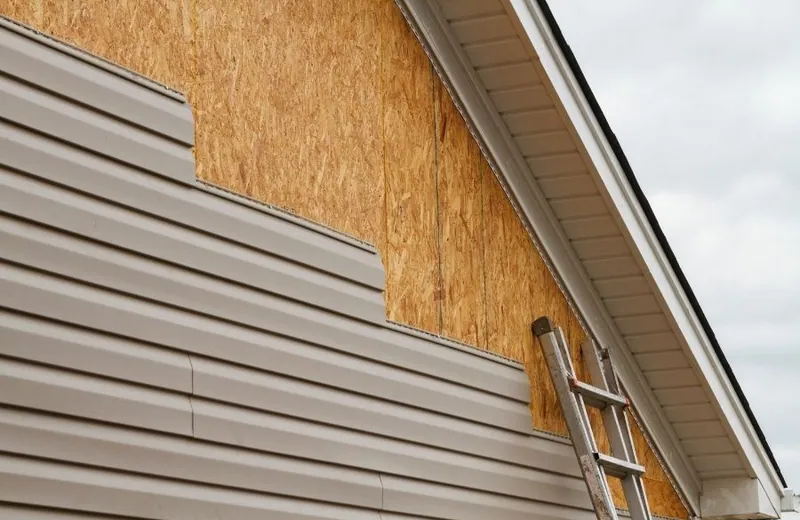
Full tear-off and replacement. We remove the old siding, inspect and repair the sheathing and framing, then install new housewrap, flashing, siding and trim.

Our approach

We open a test area first, write substrate repair allowances into the estimate and photograph any hidden damage before closing the wall back up.

In Roswell, GA

This is how we handle Roswell's failing Masonite, LP and OSB siding, aging cedar and moisture-damaged EIFS on 1980s–2000s homes.

Best for

Homes with widespread rot, discontinued products or an inspection report from a pending sale.

Siding Repair Services

We replace individual damaged boards, panels and trim and seal up the places where water gets in.

Our approach

We match the profile, exposure and texture as closely as we can, then prime and paint to blend.

In Roswell, GA

These are quick repairs for storm-damaged vinyl, woodpecker holes in cedar, and rot near downspouts or deck ledgers on Roswell homes.

Best for

Localized damage on siding that otherwise still has life left in it.

Siding Installation

New siding for additions, rebuilds and new construction, in any material we carry.

Our approach

We coordinate with framers and roofers so the weather barrier and flashing are continuous.

In Roswell, GA

Common on infill rebuilds in Sandy Springs and Brookhaven and on additions in older Roswell neighborhoods.

Best for

Builders, additions and whole-home renovations.

Vinyl Siding Installation

We install premium insulated and standard vinyl siding with matching trim, soffit and J-channel.

Our approach

We nail loosely so panels can expand in Georgia heat, and we use proper laps and flashing behind every J-channel.

In Roswell, GA

A cost-effective choice for Woodstock, Duluth and Norcross homes where the HOA allows vinyl. Not usually approved in the historic district.

Best for

Budget-minded owners and rental properties that need low maintenance.

Fiber Cement Board and Batten Siding Installation

We install board and batten siding in fiber cement, engineered wood or real wood, on whole houses or as accents.

Our approach

Panels go on with flashed horizontal joints and the battens are laid out evenly from a centerline.

In Roswell, GA

Board and batten fits the modern-farmhouse builds in Milton and Crabapple, and it suits historic-style homes near Canton Street.

Best for

Farmhouse, cottage and transitional homes.

Board and Batten Exterior Installation

Full board-and-batten exterior makeovers, including trim, gable treatment and color planning.

Our approach

We mock up batten spacing and colors before you submit to your HOA.

In Roswell, GA

A popular way to update dated 1980s Roswell contemporaries without changing the home's footprint.

Best for

Owners who want a fresh, modern look.

Vertical Siding Installation

Vertical panel and plank siding for accent walls, gables and contemporary designs.

Our approach

We use furring or drainage gaps where needed so vertical joints can dry.

In Roswell, GA

Common on modern infill homes in Brookhaven Fields and Ashford Park.

Best for

Contemporary and mixed-material designs.

Modern Siding Installation

We install contemporary exteriors that mix panel, lap, metal and wood-look materials.

Our approach

We plan clean reveals, concealed fasteners and crisp trim details.

In Roswell, GA

Fits the teardown-and-rebuild homes going up in Sandy Springs, Smyrna and Chamblee.

Best for

New builds and bold renovations.

Wood Siding Installation

We install new and in-kind replacement wood clapboard, drop siding and board and batten.

Our approach

Every board is back-primed and every cut end sealed, with flashed openings and stainless or hot-dipped fasteners.

In Roswell, GA

Often required for Certificates of Appropriateness in Historic Roswell and around Marietta Square.

Best for

Historic homes and authentic restorations.

Cedar Siding Installation

We install cedar lap and channel siding with factory or field-applied finishes.

Our approach

We use rainscreen gaps on shaded walls and pre-finish all sides.

In Roswell, GA

Matches the rustic contemporaries in Mountain Park and Berkeley Lake.

Best for

Owners committed to a natural wood look.

Cedar Shake Siding Installation

We install cedar shake and shingle siding, or fiber cement shingles that look like it, on gables and accents.

Our approach

Shingles go on with staggered keyways, two fasteners per shingle and a breathable underlayment.

In Roswell, GA

These are classic gable accents on Johns Creek and Alpharetta colonials, and fiber cement versions stand up to woodpeckers.

Best for

Craftsman and coastal-style accents.

Engineered Wood Siding Installation

We install LP SmartSide engineered wood lap, panel and trim.

Our approach

We install to LP's specs for clearances, edge sealing and paint so the boards resist moisture.

In Roswell, GA

Lighter and more impact-resistant than fiber cement, and popular on Milton and Alpharetta new construction.

Best for

Owners who want a wood look with a long manufacturer warranty.

Metal Siding Installation

We install steel panel and lap siding for homes, accents and outbuildings.

Our approach

We use correct fasteners and trim to allow for thermal movement.

In Roswell, GA

A good fit for modern farmhouse accents and wooded lots where falling limbs and pests are a concern.

Best for

Modern designs and low-maintenance outbuildings.

Aluminum Siding Installation

We repair, replace and match aluminum siding and trim coil.

Our approach

We source matching profiles or replace whole walls cleanly.

In Roswell, GA

Common on 1950s–60s ranches in Chamblee, Doraville and Norcross.

Best for

Mid-century homes with existing aluminum siding.

Stone Veneer Siding Installation

We install manufactured and natural stone veneer on foundations, wainscots and entries.

Our approach

We use a drainable lath-and-scratch system with weep screeds set above grade.

In Roswell, GA

Helps new siding blend with the existing stone fronts on 2000s North Fulton homes.

Best for

Curb-appeal upgrades and mixed-material fronts.

Soffit and Fascia Installation

We replace rotted fascia and install vented soffits in fiber cement, aluminum or vinyl.

Our approach

We fix the rafter tails and install drip edge before the new soffit and fascia go on.

In Roswell, GA

Overflowing gutters on wooded Roswell lots rot fascia fast. Gutter replacement is available too.

Best for

Homes with sagging, rotted or poorly vented eaves.

Exterior Trim Installation

We install window and door casings, corner boards, frieze boards and band boards in PVC, fiber cement or wood.

Our approach

We flash over head trim, back-prime the trim and seal the joints.

In Roswell, GA

Stops the sill and corner-board rot we find on so many 1980s–90s Roswell homes.

Best for

Homes whose trim has rotted ahead of the siding.

Siding Inspection and Consultation

We inspect your siding, probe for moisture and give you written findings with photos.

Our approach

We check moisture at sills, joints and roof-wall intersections and identify what your existing products are.

In Roswell, GA

Useful for pre-sale reports, after hail and to identify hardboard on Roswell homes.

Best for

Sellers, buyers and anyone weighing repair against replacement.

Asbestos Siding Removal and Replacement

We replace asbestos-cement siding, coordinating handling and disposal under the applicable rules.

Our approach

We keep the material intact and wet, follow approved handling practices and dispose of it properly.

In Roswell, GA

Common on 1950s–60s homes in Chamblee, Doraville and Norcross.

Best for

Mid-century homes with brittle cement shingle siding.

Mobile Home Siding Replacement

We replace siding and skirting on manufactured homes.

Our approach

We use lightweight panels and fasteners suited to the home's framing.

In Roswell, GA

For manufactured homes within our 20-mile service radius.

Best for

Manufactured-home owners who need weather-tight walls.

Commercial Siding Installation

We install siding on offices, retail buildings and multifamily properties.

Our approach

We phase the work to keep businesses open and coordinate with property managers.

In Roswell, GA

Fits Canton Street storefronts and the small commercial buildings along the GA-400 corridor.

Best for

Property managers and small commercial owners.
FALS

Expert Fascia & Soffit Repair in Roswell, GA

In Roswell, fascia and soffits get a lot of abuse. Tall pines and hardwoods fill gutters with debris, and the overflow soaks the fascia boards. With humid summers and more than 50 inches of rain a year, wet wood can stay damp for weeks, and winter freeze-thaw cycles open up the damage even more. Rotted fascia lets water into the roof edge, and damaged soffits can let in carpenter bees, woodpeckers and other pests. Roswell Siding & Exterior Specialists repairs and replaces fascia and soffit as part of finishing your exterior. We can do it on its own or along with new James Hardie, fiber cement or engineered wood siding. On older homes in Historic Roswell and established neighborhoods, we pick profiles that fit the home's original look. We also help with HOA and historic review when it's needed. We can replace gutters and paint the exterior too, so the whole roofline works together and looks finished.

  • Repair and replacement of fascia boards and rotted trim along the roofline caused by gutter overflow

  • Soffit replacement that helps keep out carpenter bees, woodpeckers and other pests

  • Profiles and colors chosen to fit older Roswell homes and historic district settings

  • Coordinated with gutter replacement and exterior painting for a complete, weather-ready roofline

  • HOA and historic review support, with clear communication from planning to cleanup

Roswell Siding & Exterior Specialists Siding Contractor in Roswell, GA project in Roswell, GA (1)
Simple & Transparent

How Our Siding Projects Work

A siding project in Roswell often means HOA approval, a possible permit and some hidden rot. Our process is built around all three so nothing catches you off guard halfway through.

Inspection and Consultation

  • Walk every elevation and probe for moisture at sills, joints and bottom courses
  • Identify existing products such as hardboard, EIFS, vinyl or asbestos-cement
  • Photograph damage, including documentation for storm insurance claims
  • Talk through your materials, style and budget

We check whether your home is in Roswell's Historic District, whether an HOA applies and whether it was built before 1978, which would trigger lead-safe practices.

Visit lasts 60–90 minutes; scheduled within days

Written Estimate and Material Selection

  • Itemized pricing for siding, trim, soffit and labor
  • Clear allowance for sheathing or framing repair if hidden rot turns up
  • Color and profile samples, including James Hardie ColorPlus options
  • Financing options explained if you want them

We match new siding to existing brick or stone fronts so the whole house reads as one design.

Typically 2–5 business days

HOA, Historic and Permit Approvals

  • Prepare spec sheets, color chips and drawings for your architectural review committee
  • Support Certificate of Appropriateness applications in Roswell or Marietta
  • Confirm permit requirements with your city's building department
  • Order materials once everything is approved

Every city from Roswell to Smyrna sets its own permit rules, so we check before starting work.

About 1–6 weeks, depending on the review board

Installation

  • Protect landscaping, AC units and windows, and set staging on steep lots
  • Tear off old siding and repair rotted sheathing, sill plates and trim
  • Install housewrap, window and kick-out flashing, then siding and trim
  • Daily cleanup, including magnetic nail sweeps

Two- and three-story basement walls on wooded Roswell and Sandy Springs lots need tall staging and careful protection of trees and beds.

Usually 1–3 weeks for a whole home, weather permitting

Final Walkthrough and Finishing

  • Walk the whole exterior with you and fix any punch-list items
  • Caulk, touch up, and paint if exterior painting is part of the job
  • Hand over photos, product details and manufacturer warranty registration information
  • Recommend gutter, grading and maintenance steps

We confirm the clearance between the siding and the ground so red clay splash-back and wet soil don't reach the new bottom courses.

1 day, plus painting if included
The Roswell Siding & Exterior Specialists Difference

Why Roswell Homeowners Choose Roswell Siding & Exterior Specialists

We Know Roswell's Houses Era by Era

A 1972 cedar home off Riverside Road, a 1989 hardboard colonial in Martin's Landing and a 2004 brick-front in Horseshoe Bend each fail in their own way. We know which products went up in which decades, where water usually gets behind them, and what we'll probably find once the old siding comes off. That's how our estimates stay realistic and how we plan for problems before you're surprised by them. We use local knowledge to make decisions about your house, not just to market ourselves.

Bonded and Insured, With the Paperwork to Prove It

After every spring hailstorm, out-of-state crews and storm chasers come through North Fulton, collect deposits and leave. We're bonded and insured, and we'll gladly give you documentation before you sign anything. If your HOA, the city or your insurance adjuster asks for proof of coverage, we'll provide it. With more than a dozen city building departments in our area, we check the local rules for your specific address before any work starts.

We Fix the Rot Behind the Siding, Not Just the Surface

Here, new siding on top of rotted sheathing is just money spent on a future failure. On every tear-off, we inspect the sheathing, sill plates, band joists and window framing before the new weather barrier goes on. If we find hidden damage, we photograph it, explain it and price it against the allowance in your estimate. You'll know exactly what was behind your walls and what we did about it.

HOA and Historic Review Support

Many Roswell, Johns Creek, Alpharetta and Milton HOAs limit materials, profiles and colors. Some ban vinyl outright. In the Historic District around Canton Street, Mimosa Boulevard and Sloan Street, you'll need a Certificate of Appropriateness, and the commission usually prefers wood or fiber cement with a matching reveal. We put together spec sheets, samples and drawings for your submittal so approval goes faster and you don't install something you'll later be asked to tear off.

Fiber Cement and Engineered Wood Are Our Core Work

Most of our projects are James Hardie, other fiber cement and LP SmartSide engineered wood, because those products handle Roswell's humidity, termites and woodpeckers far better than hardboard or untreated wood. We install to each manufacturer's specifications for clearances, joint flashing and fastening. That protects the product warranties and keeps the siding performing for decades. When cedar, board and batten or stone veneer suits the house better, we install those too.

Clear Estimates and Steady Communication

Your estimate lists the siding, trim, soffit, flashing and labor separately. It also spells out how we'll handle any rot we find, so there's no vague change order later. Throughout the project, you'll know when the crew is coming, what was done that day and what happens next. Financing is available if you'd rather spread out the cost of a full re-side.

One Team for the Whole Exterior

Siding is rarely the only problem. Overflowing gutters rot the fascia, worn trim lets water in, and paint fades. We handle soffit and fascia, exterior trim, exterior painting and gutter replacement along with the siding, so one crew coordinates everything. On steep, wooded lots in Roswell, Mountain Park and Sandy Springs, that also means one setup of staging and one round of landscape protection instead of several.

Trusted Locally

A Local Siding Contractor You Can Verify

Roswell homeowners call us when they want careful planning, honest answers about what's behind their siding, and steady communication from the first inspection through the final walkthrough.

20-Mile
Service Radius Around Roswell
18
North Atlanta Communities Served
25
Siding and Exterior Services
Bonded & Insured
On Every Project
BondedInsuredFinancing available
Where We Work

Siding Contractor Serving Roswell and the North Atlanta Suburbs

We're based in Roswell and cover homes within roughly 20 miles. That area spans North Fulton, the Perimeter cities, western Gwinnett, and parts of Cobb and Cherokee. Each area has its own housing stock, review boards and siding problems, and we plan around them.

North Fulton

RoswellMountain ParkAlpharettaMiltonJohns Creek

Perimeter and DeKalb

Sandy SpringsDunwoodyBrookhavenChambleeDoraville

Gwinnett

Peachtree CornersNorcrossBerkeley LakeDuluth

Cobb and Cherokee

MariettaViningsSmyrnaWoodstock

We serve homes within about a 20-mile radius of Roswell. Not sure if you're inside it? Reach out through our contact page and we'll confirm. Not sure if we cover your area? Call (770) 697-0558.

Transparent Pricing

How Much Does Siding Cost in Roswell, GA?

Siding prices around Roswell depend on the material, the size and height of your walls, and above all on what's hiding behind the old siding. The ranges below are typical for North Fulton homes. Your written estimate will reflect your own house.

Primary Factor

Siding Material

Vinyl is usually the least expensive installed. Engineered wood like LP SmartSide is in the middle, and James Hardie fiber cement costs more, especially with the ColorPlus factory finish. Natural cedar and stone veneer are at the top. In much of Roswell, Alpharetta and Johns Creek, HOAs require fiber cement anyway, so the real choice tends to be the finish and profile, not the material category.

Primary Factor

Hidden Rot and Substrate Repair

When the old siding is failing hardboard or EIFS, there's often damaged sheathing, sill plates or band joists behind it. Repairs can run from a few hundred dollars for a couple of sheets of plywood to several thousand where whole walls have rotted. We include a clear allowance and a per-unit price in the estimate, so you'll know the cost of whatever we find before we start.

Major Factor

Home Size, Height and Lot Access

Total wall area drives material and labor costs. Height and access matter too. A three-story rear wall on a steep basement lot in Roswell, Sandy Springs or Mountain Park needs tall staging, more labor and extra landscape protection. A single-story ranch on a flat Duluth lot goes much faster. Lots of gables, dormers and bump-outs add cutting and trim time.

Secondary Factor

Trim, Soffit, Fascia and Extras

Most re-siding projects include new window and door casings, corner boards, frieze boards, soffits and fascia, especially on homes where the original wood trim has rotted. Exterior painting, gutter replacement, kick-out flashing and stone veneer accents all add to the cost, but they also make for a complete, weather-tight result.

Secondary Factor

Old Material Removal and Regulations

Tearing off and disposing of standard siding is built into most quotes. Asbestos-cement siding on mid-century Chamblee or Doraville homes needs controlled handling and disposal. Homes built before 1978 require lead-safe work practices. Permits, HOA submittals and Historic Preservation Commission reviews can add fees and lead time, too.

Typical projectDetailsEstimated range
Hardboard-to-Hardie replacement on a 1980s–90s Roswell colonialTwo-story, about 2,400–2,800 sq ft of wall area. Full tear-off of LP or Masonite, moderate sheathing repair, new HardiePlank and trim$28,000 – $48,000
Vinyl siding replacement on a Woodstock or Duluth subdivision homeSides and rear of a brick-front home, insulated or premium vinyl, new J-channel and trim coil$12,000 – $24,000
Board-and-batten and cedar shake accent update in Milton or AlpharettaFront gables and porch walls in Hardie board and batten with shingle accents, plus paint$6,500 – $15,000
Rot repair on trim, sills and sidingReplace rotted corner boards, window sills, fascia and 1–3 walls' worth of damaged boards, then paint to match$900 – $6,500

Financing is available for siding replacement and larger exterior projects. Ask about options during your estimate. In North Fulton's busy real estate market, inspectors routinely flag failing hardboard and rotted trim. Fiber cement or engineered wood that's installed correctly takes that objection off the table and protects the home's value for decades.

Questions & Answers

Siding Questions Roswell Homeowners Ask Us

How much does it cost to replace siding on a house in Roswell?

Most full replacements on typical two-story Roswell homes fall between about $12,000 and $48,000. Vinyl sits at the low end, and James Hardie fiber cement on a larger colonial sits at the high end. The biggest variable is hidden damage. Homes with 1980s–90s Masonite or LP hardboard often have rotted sheathing or sill plates that need repair. Height, steep lots, trim, soffit and fascia also affect the price. Our written estimates break out every line item and include a clear allowance for substrate repair, so you can compare quotes fairly.

How long does a siding replacement take?

The installation itself usually takes one to three weeks for a whole house, depending on its size, how much rot we find and the weather. Summer thunderstorms and winter cold snaps can cost us a day here and there. Before work starts, allow time for HOA architectural review, which often runs one to four weeks, and for a Certificate of Appropriateness if you're in Roswell's Historic District. Material lead times matter too, especially for ColorPlus colors. We'll give you a realistic schedule at the estimate.

Do I need a permit or HOA approval to replace siding in Roswell?

Often, yes. Permit rules vary by city in Georgia. Roswell, Alpharetta, Milton, Sandy Springs and the other cities each have their own building departments, and permits are more likely when the job involves replacing sheathing, changing structural elements or covering a large area. We confirm the rules for your address before we start. Most North Fulton HOAs also require approval of material, color and profile. If you're in the Historic District around Canton Street, Mimosa Boulevard or Sloan Street, you'll need a Certificate of Appropriateness, and we help prepare that submittal.

How can I tell if my house has Masonite or hardboard siding?

If your home was built between about 1985 and 1996, there's a good chance. Hardboard usually has an embossed wood-grain pattern that looks too uniform to be real wood. Check the bottom edges, especially on shaded or north walls. Swollen, flared or soft edges, blistered paint and nail heads sunk into the board are classic signs. Sometimes you'll find a manufacturer stamp on the back of a board in the attic or garage. We can identify it during an inspection and check how far the damage has spread.

Should I repair or replace my siding?

Repair makes sense when the damage is limited to a few boards or a single wall, and the rest of the siding is sound and still made. Replacement is usually the better value when you have widespread hardboard swelling, rot on several walls, EIFS moisture problems, or storm damage to a discontinued vinyl profile that can't be matched. As a rough rule, once repairs approach a third of the cost of replacement, or keep coming back every year, full replacement saves money. We'll give you an honest recommendation either way.

Is James Hardie better than vinyl for Roswell's climate?

For most Roswell homes, yes. Fiber cement doesn't swell in our humidity, resists termites, woodpeckers and fire, and holds paint well. ColorPlus finishes resist UV fading. Vinyl costs less and is low-maintenance, but older vinyl gets brittle and cracks in hail, darker colors can warp in summer heat, and it grows algae on shaded walls. Many HOAs and the Historic Preservation Commission also prefer fiber cement. Vinyl is still a solid budget choice where your HOA allows it.

How do I keep my siding from rotting in the first place?

Water management does most of the work. Keep gutters clear (pine needles clog them fast here) and make sure downspouts discharge well away from the walls. Keep the grade sloping away from the house. Leave clearance between the siding and the mulch or soil, typically around 6 inches at grade and 1–2 inches above roofs and decks. Trim back shrubs and limbs so walls can dry. Recaulk trim joints and repaint wood before the finish fails. Wash off algae and red clay stains every year or so, and check north walls closely.

When should I call about siding damage instead of waiting?

Call right away if storm damage has left sheathing exposed, if panels are missing or flapping, if you see interior water stains or smell mustiness near exterior walls, or if soft spots show up near windows or at the base of walls. Water that's already behind the siding keeps spreading through every rain and humid week. Also call promptly after spring hail, since insurance claims have time limits and need documentation. Fading or minor staining can wait a season, but have it looked at before you list the house.

Find Us

Serving Roswell, GA & Nearby

675 Mansell Rd STE 104, Roswell, GA, 30076

Ready When You Are

Get a Clear Plan for Your Roswell Home's Siding

Whether it's swollen hardboard, a rotted window sill or a wall full of hail dents, we'll find what's really going on behind your siding and lay out what it'll take to fix it.

  • A thorough inspection with photos of moisture, rot and storm damage
  • A written, itemized estimate with a clear allowance for any hidden repairs
  • Help with HOA architectural review and Roswell historic district submittals
  • Material and color guidance, including James Hardie, LP SmartSide and cedar
  • A bonded and insured crew that protects your landscaping and cleans up daily
  • One team for siding, trim, soffit, fascia, painting and gutters
  • Financing available for larger projects

Serving Roswell and homes within about 20 miles, including Alpharetta, Milton, Mountain Park, Sandy Springs, Johns Creek, Dunwoody and Marietta.

Storm damage leaving walls open to the weather? Contact us and we'll prioritize temporary protection and documentation for your insurance claim.

Bonded · Insured

Roswell Siding & Exterior Specialists Free estimates across Roswell, GA